History
The Evolution of Traffic Control in New York City
Traffic control in New York City has evolved alongside the city itself. In the 1890s, as bicycles surged in popularity, Commissioner Theodore Roosevelt organized the NYPD’s first Bicycle Squad to rein in “speed-demon” cyclists who exceeded the city’s 8-mph speed limit.
Known as the “Scorcher Squad,” these officers soon expanded their work to address the newest challenge on the streets—the automobile. Since traffic summonses did not yet exist, speeders were arrested on the spot.
1890
1900
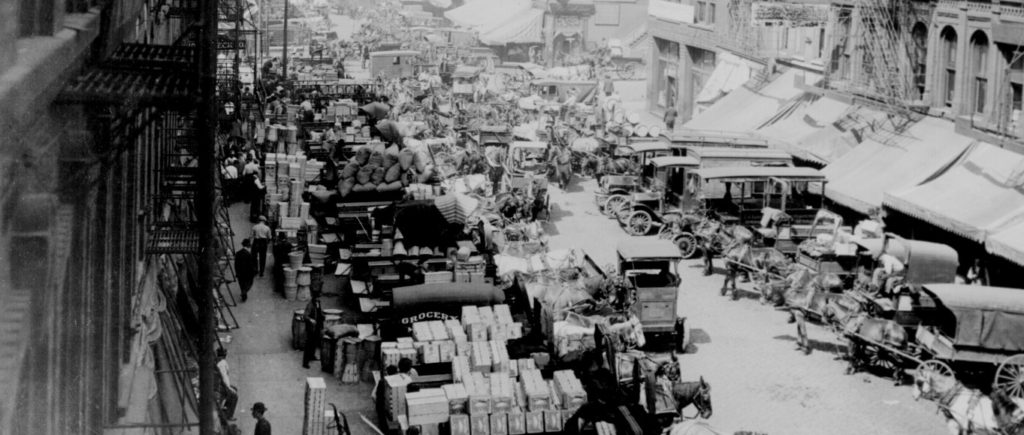
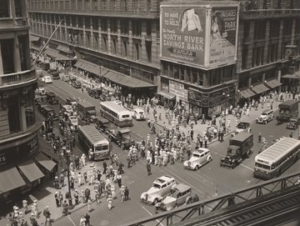
By the early 1900s, New Yorkers struggled to navigate crowded, unpaved streets teeming with people, horses, and vehicles. The need for order became urgent as automobiles grew more common. In 1908, Commissioner Bingham introduced the city’s first official traffic regulations, which required drivers to keep right and signal before slowing or turning. By 1910, the NYPD was authorized to issue summonses for traffic infractions, marking the start of modern enforcement.
The city also began experimenting with traffic control devices. In 1915, manually operated semaphores appeared at intersections, followed in 1916 by the first traffic tower at Fifth Avenue and 42nd Street.
1915
Early traffic lights were confusing—at one point, a green light meant “stop” for some drivers—but by 1924 New York adopted the standardized red-yellow-green system. Electrically synchronized signals soon revolutionized city traffic, and by 1934 more than 7,700 lights guided vehicles across Manhattan.
As bridges, tunnels, and highways opened in the 1920s and 1930s—including the Holland Tunnel, George Washington Bridge, and Triborough Bridge—the city’s traffic volume exploded, making professional traffic control essential.
1920
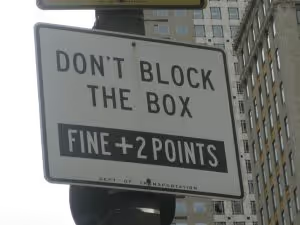
In 1962, New York City created the Traffic Enforcement Agent (TEA) title to address the growing burden of traffic management.
1960
1990
Originally under the Department of Transportation, TEAs merged with the NYPD in 1996. Today, nearly 4,000 civilian uniformed agents enforce traffic laws, manage intersections, prevent gridlock, and support the city’s Vision Zero safety goals.
Over the decades, TEAs have proven essential not only to traffic flow but also to public safety. Agents have rescued drivers from burning vehicles, helped deliver babies, and assisted police in capturing suspects. They stood out during crises such as 9/11, Hurricane Sandy, the 2003 blackout, and recent terrorist attacks, working around the clock to keep the city moving.
TODAY
From the Scorcher Squad of the 1890s to the NYPD Traffic Enforcement Agents of today, one mission has remained constant: to keep New York City safe, moving, and alive.